
Connector & hose fixes, $100–$200
The brittle flexible connector behind the cooktop, a small part responsible for an outsized share of leaks.
Gas does not grade on a curve. A connection is either tested and certified or it is a liability with a warranty problem, so every gas job we do across Cremorne, from a cooktop swap to a full outdoor kitchen line, ends the same way: needle steady on the manometer, appliances burning blue, paperwork done.
NSW law reserves every millimetre of gas work for licensed gasfitters, connecting an oven included, because gas fails differently to water. A water mistake stains a ceiling; a gas mistake is a leak you breathe, a fire you host, or carbon monoxide you never smell. It is no coincidence that the leaks we chase most often trace back to a confident handyman and a roll of thread tape.
The licence is not the paperwork, it is the finish line it enforces: the whole installation held against a manometer until the needle stays put, appliances burning correctly with the ventilation they need, work done to AS/NZS 5601, the standard your insurer will ask about if it ever matters. Across Cremorne and the Lower North Shore, that gauge test is how every one of our gas jobs ends.


Salt-laden harbour air corrodes older metal fittings and joints, weakening pipes and inviting leaks and recurring blockages.
Salt attacks external gas pipework, regulators, meter connections and appliance fittings continuously. It is the reason a coastal property routinely fails a pressure test at a fitting rather than in a length of pipe.
Visible rust staining or white crusting at a joint is the early warning. It is cheap to address at that stage and considerably less so once the fitting is weeping gas.
For a food business, gas is production. A cooktop out of service is not an inconvenience to schedule around, it is a menu that cannot be served.
In a block the line into your kitchen is usually the end of a service other homes depend on, so isolating, testing and proving that section still holds is part of even a simple cooktop swap.
So we carry the common commercial failure parts and we work to your service times rather than ours. Where a part genuinely has to be ordered, you will hear that immediately along with what can be kept running in the meantime.
Meters and regulators on the weather side of a property near the water take the worst of it, and a corroded regulator is both a supply problem and a safety one.
Ventilation and clearance clauses were not written with small apartment kitchens in mind, and they regularly rule out the position people assume will work. We establish a compliant location first.
Relocating or shielding a badly exposed meter assembly is straightforward work that is rarely done until something fails. If yours is green, crusted or streaked with rust, it is worth raising.
Gas installations and appliances are governed by AS/NZS 5601:2022, referenced in the Gas and Electricity (Consumer Safety) Regulation 2018 and legally enforced in NSW (NSW Government), covering pipe sizing, ventilation and appliance clearances. It is licence-only work.
Older properties routinely have redundant gas pipework, a disconnected heater, a removed stove, a fireplace converted decades ago: and it is not always capped to any standard, or capped at all.
Those are found by pressure testing the whole installation rather than the part in use. It is the single most common reason an old house fails a test, and it is usually inexpensive to put right once located.
Putting a gas cooktop where there was not one, or moving an appliance during a renovation, is rarely just plumbing in a block. It usually requires an owners corporation approval, sometimes a by-law, and always correct ventilation and flueing for the space.
Every job finishes on a pressure test with a certificate. Gas has no visible half-finished state: an installation either holds and is certified, or it is not complete.
We will tell you what the work needs before you go to the committee, so the application you submit is the one that gets approved rather than the one that comes back with questions.
Outdoor gas appliances near the water live hard. Burners corrode, jets block with salt deposit, and hoses perish faster than the manufacturer's expected life.
It is not a reason to avoid an outdoor installation, but it is a reason to specify for the setting, stainless where it is exposed, a hose replacement interval, and a cover that is actually used.
Commercial premises get inspected, insured and sold, and all three ask for the same thing: documentation that the gas installation is compliant and who certified it.
Every job we do finishes with a compliance certificate, and for commercial clients we keep the history so the paperwork exists when a landlord, insurer or inspector asks for it rather than being reconstructed under pressure.
The brittle flexible connector behind the cooktop, a small part responsible for an outsized share of leaks.
Leaking threads and valves sealed properly and proven again under pressure.
Corroded or damaged sections replaced; concealed lines needing access run $800–$2,500.
Connected, tested, certified. Extending a line or adding a bayonet to reach it is quoted on top, fixed, first.
Sydney's 2026 licensed-gasfitter range, call-outs typically $80–$150. The certificate at the end costs nothing extra, it is the job.
No gas job of ours ends without holding pressure on a gauge, that is the receipt that matters. Figures here are indicative of the 2026 Sydney market rather than a quote from us, you get your own number as a fixed price before any work starts.
Suspected leaks start with isolation at the meter and ventilation. Diagnosing a system still feeding its own leak is how amateurs get hurt.
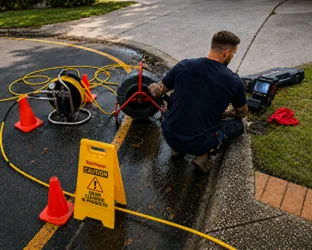
A manometer proves whether the installation loses pressure; detection fluid and instruments then walk it back to the guilty joint or run.

The failed piece is replaced with compliant material to AS/NZS 5601, one connector or a full rerun, never sealant and optimism.
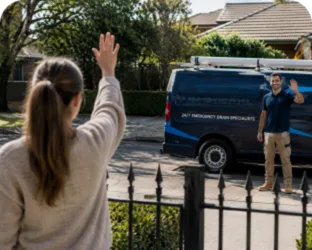
The whole installation holds on the gauge, appliances relight to clean blue flames, ventilation checks out, and the compliance record is yours.
Nor should it, legally. One visit: connected, tested, certified, warranty intact. The proper way is also the cheap way, counted honestly.
Licensed hands, a passing pressure test, and the certificate to prove it. Smelling gas this minute? 131 909 from outside comes before this form.

Leave your details and our local Cremorne team will call you back fast.