
Reachable burst: $200–$500
Garden, garage or open wall access, cut out and repaired at daytime rates.
Water finds the ceiling fast and the cause slowly, the wet patch is almost never over the split. We shut it down, trace the failure to its source, and repair the pipe rather than bandaging the symptom. Around the clock across Cremorne and the Lower North Shore.
Most of what bursts around Cremorne is age meeting pressure. Original copper lines from the mid-century build era wear thin from the inside until a pinhole opens; older galvanised steel rusts until a fitting lets go; and garden poly lines split where a root or a shovel found them years ago. Add mains pressure that runs high across parts of the Lower North Shore, and the weakest point eventually announces itself.
The catch is that water travels. It runs along the outside of the pipe, along joists and wall plates, and surfaces somewhere downhill of the actual split, which is why the wet patch on the ceiling is so often metres from the leak. Repairing where the water shows up fixes nothing. We trace the line back to the failure itself, repair that, and pressure-test before closing anything back up.


Salt-laden harbour air corrodes older metal fittings and joints, weakening pipes and inviting leaks and recurring blockages.
Four things, and none of them need a plumber to inspect: the fittings around the hot water unit, any external tap that has gone stiff, visible pipework on the weather side of the house, and the flexible hoses inside.
Anything showing white crusting or rust staining at a joint is telling you where the next failure will be. Replacing a corroded fitting before it lets go is a fraction of the cost of the water damage after.
Leafy heritage streets sit above old clay sewers, and roots pushing into cracked joints are the leading cause of blockages we clear in Cremorne.
Homes plumbed before the 1960s were run in galvanised steel, which corrodes from the inside out. The wall thins invisibly for decades while the bore narrows with rust, so the first symptom is usually poor pressure rather than a leak.
When it finally goes, it goes at the thinnest point rather than the most convenient one. If your pressure has been declining and the water runs brown after the house has sat empty, that is the pipe telling you what it is made of.
Blocks along Military Road share ageing stacks that clog with grease, fat and wipes, needing a proper hydro-jet clear.
The line is broadly the same as for drains: pipework serving only your lot is yours, and anything serving the building, risers, mains, common-property pipework, belongs to the owners corporation.
Where it gets argued is damage. A common-property pipe that damages your contents usually engages two policies, and the way to keep that simple is contemporaneous evidence. We document time, source and cause on the night for exactly that reason.
Land falling to the harbour strains ageing pipe joints and lets stormwater scour and shift lines, causing silt build-up and chokes.
Sloping properties are full of retaining structures, and services frequently run behind or beneath them because that was the only route available. A leak in that position is both harder to reach and more consequential, saturated backfill is what makes retaining walls fail.
If water is showing at the base of a wall, treat it as urgent even if the volume looks trivial. The plumbing repair is minor next to what the wall costs.
They can look identical from inside the house: water where it should not be, and a fixture behaving badly. The quick test is whether the water is clean and continuous, or dirty and rising when something is used.
Clean water appearing with no fixture running is a pressure pipe. Dirty water rising when you flush or drain something is the sewer. Tell us which on the phone, it decides what comes off the van and whether you should be isolating the water at all.
Garden, garage or open wall access, cut out and repaired at daytime rates.
Wall and ceiling repairs, including the tracing that keeps the access hole singular and small.
Locating gear plus concrete or excavation access: or a smarter reroute around the lot.
Roughly $180–$250/hr versus $120–$160 daytime, plus attendance. Meter off + morning booking is sometimes the clever play; we will say so.
Professional leak detection's first hour. Cheaper than the second exploratory hole, let alone the third.
Every repair ends the same way: holding mains pressure on a gauge, under a lifetime workmanship warranty. Figures here are indicative of the 2026 Sydney market rather than a quote from us, you get your own number as a fixed price before any work starts.
Meter valve clockwise: we walk you through it on the phone, and the flood stops before the van starts. On site we isolate just the injured line when the layout allows it.
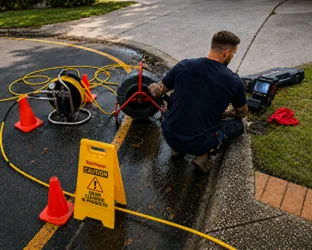
Acoustic listening, thermal imaging and section-by-section pressure testing find the actual split, which is rarely under the wet patch.

The damaged section is removed and replaced properly. If what we expose says the whole run is finished, you hear it straight, with prices for both roads.

Mains-pressure test before anything closes. The repair demonstrates itself; then, and only then, do surfaces go back.
The crisis ended when the meter closed. Call now and the repair gets planned properly, not frantically.
What people ask us with the water off, answered before you need them.

Traced with instruments, repaired once, proven under pressure: and priced before any of it starts.

Leave your details and our local Cremorne team will call you back fast.